|
|
|
|
Brain Injury
vs. Head Injury
In order to better understand about
brain injury it is important to differentiate it from
a head injury. A head injury does not necessarily mean
injury to the brain nor does a brain injury necessarily
come from a head injury. You can bump your head hard
enough to cause injury to the skull, yet not to the
brain. Whereas, in an accident involving whiplash, although
the skull may not be injured, the brain is jostled back
and forth inside the skull in a force strong enough
to cause shearing and tearing of the nerves in the brain.
[Top]
Traumatic Brain Injury (TBI)
vs Stroke (Brain Attack)
A Traumatic Brain Injury is caused
by an external force or impact, while a Stroke (brain
attack) is from an internal force. Traumatic Brain Injury
(TBI) and Mild Traumatic Brain Injury (MTBI) are caused
by an outside force, such as an automobile accident,
a fall, sports injury, assault (firearm), domestic violence
(battering) and shaken baby syndrome. Concussion is
from a brain injury. A Stroke is caused by either excess
or reduced blood supply to the brain. A Brain Tumor
is an abnormal growth of cells on the brain. The causes
are varied. The cause of Multiple Sclerosis (MS) is
not known, but it does cause brain injury.
[Top]
Descriptions of Traumatic
Brain Injury
The terms mild, moderate, and severe
are not used the same as in all other areas in medicine
or in life. The term mild means not so bad, such as
I have a mild cold or the weather will be mild today.
However, these terms when relating to brain injury -
have nothing to do with the severity of injury. Rather,
they refer to the length of time a person is unconscious
or lacks awareness of their environment!
Mild: Zero to 60 minutes
Moderate: 1 - 24 hours
Severe: Greater than 24 hours.
[Top]
Causes of Traumatic Brain Injury
Caused by an outside force, such as an automobile accident,
a fall, sports injury, assault (firearm), domestic violence
(battering) and shaken baby syndrome. Concussion is from
a brain injury.
Back to Top [Top]
Mild Traumatic Brain Injury
Each year more than 1,000,000 Americans
suffer its effects from automobile accidents, falls,
work related accidents, physical assaults and sports
injuries, such as football, hockey and soccer. Of that
number, more than 30,000 children ages 0-19 sustain
permanent disabilities as the result of brain injuries
at an estimated lifetime cost of over 4 million dollars
per person. Children are especially at risk in the afternoon
after being dismissed from school. 42.6% of child injuries
occur on roads, 34.3% at homes and 6.6% in recreation
areas. Young athletes are especially prone to MTBI.
As the mother of three teenage boys, I know my sons
are in the highest risk category for MTBI. A child is
four times more likely to be seriously injured in a
bicycle or roller-blading accident than to be kidnapped
by a stranger. A child active in sports may be hit on
the head or fall and be rendered briefly unconscious.
The child may get up and play the remainder of the game,
and only months later begin to experience symptoms of
brain injury, called post-concussive syndrome.
[Top]
Post Concussive Syndrome
A persons condition immediately following
injury may not always indicate the seriousness of brain
injury. Although most people who experience an MTBI
appear quite normal within hours of injury, new or lingering
symptoms often force them to seek medical assistance
later. Though we can define MTBI, we often cannot detect
it and thus are still far from understanding it. MTBI
is the leading misdiagnosed (often undiagnosed!) health
problem in the United States today. Many people across
the nation are being misdiagnosed as suffering from
conditions of depression, learning disabilities, chronic
fatigue syndrome, migraines and seizures: in actual
fact, they are suffering from MTBI.
In post-concussive syndrome, symptoms
often appear in clusters and may last for days, weeks,
or longer. Intensified by fear and uncertainty, this
syndrome can interfere with daily life and lead to frustration
and despair, especially when its cause remains unknown.
Unlike brain injuries detected through CAT scan, EEG,
and MRI, mild traumatic brain injury can only be accurately
diagnosed through diagnostic testing that detects nerve
cell damage, as in neuropsychological evaluation - (testing
that measures different aspects of brain function),
SPECT scan, Q-EEG or autopsy.
During my own rehabilitation, it became
clear that a majority of people, from the injured person
to those in health care and social services had no idea
what MTBI is. Therefore, I decided to write the first
reference book to provide vital information to people
with MTBI, their families, their friends and to organizations
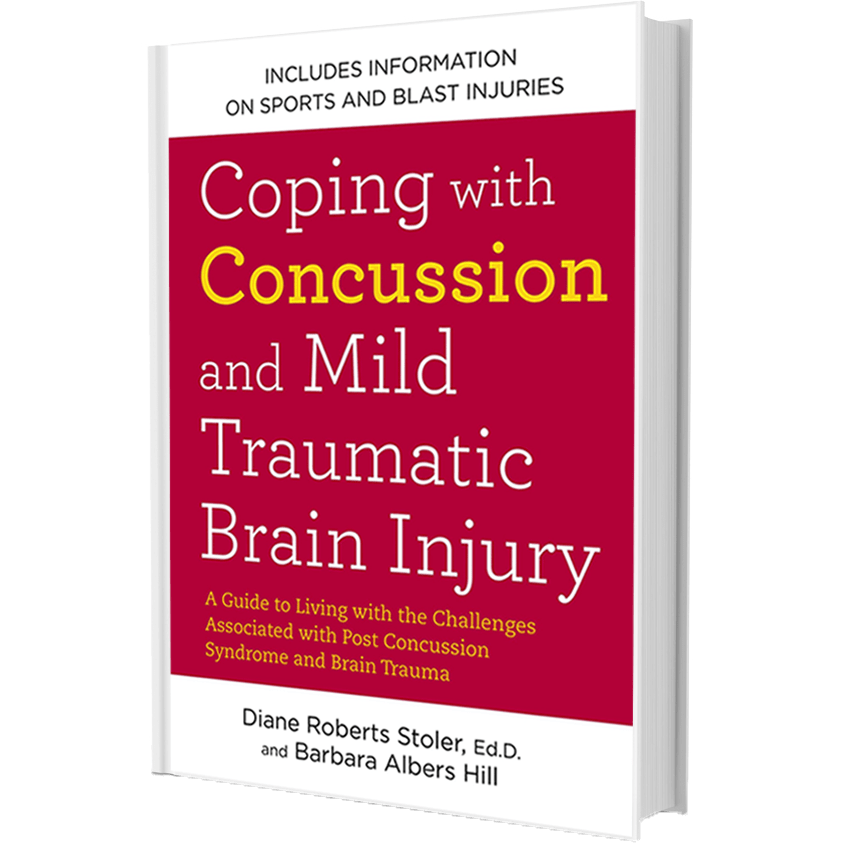
that work with them. That book is Coping
With Mild Traumatic Brain Injury. In the first
six years following my accident, I found it difficult
to do the things that were once second nature to me.
Yet, with time, comes healing in body, mind and spirit.
You realize that you are no longer the same person as
before the injury, but you are stronger, a composite
of "old" and "new." Gradually, you accept the changes
within yourself and begin to reconnect with life again.
Through your inner strength, you can emerge from the
cocoon of brain injury.
[Top]
A Stroke is a Brain Injury
A Stroke is caused from an internal force, either excess
or reduced blood supply to the brain.
[Top]
A TBI is a Brain Injury
A Traumatic Brain Injury is caused
by an external force or impact, while a Stroke (brain
attack) is from an internal force. Traumatic Brain Injury
(TBI) and Mild Traumatic Brain Injury (MTBI) are caused
by an outside force, such as an automobile accident,
a fall, sports injury, assault (firearm), domestic violence
(battering) and shaken baby syndrome. Concussion is
from a brain injury. A Stroke is caused by either excess
or reduced blood supply to the brain. A Brain Tumor
is an abnormal growth of cells on the brain. The causes
are varied. The cause of Multiple Sclerosis (MS) is
not known, but it does cause brain injury.
Back to Top
[Top]
A Concussion is a Brain Injury
Loss of consciousness (or awareness of one's environment)
for up to 1 hour. After one hour, it is called a coma.
[Top]
A Contusion is a Brain Injury
A contusion is a bruise caused by a blow to the muscle,
tendon or ligament; caused when blood pools around the
injury and discolors the skin.
[Top]
Multiple Sclerosis (MS) is an Injury
to the Brain
The cause of MS is not known, but it does cause brain
injury.
[Top]
Brain Tumor Can Cause Brain Injury
A Brain Tumor is an abnormal growth of cells on the brain.
The causes are varied.
[ Top] |
|
|
Please consult
Dr. Diane for non emergency use only! If you are experiencing
symptoms of a brain injury see your Doctor or seek medical
help immediately! Dr. Diane provides medical information and
advice which is current and accurate; however, the information
presented is not intended as a substitute for professional
medical advice. Consult with your physician or other qualified
health care provider prior to starting any new treatment or
for questions regarding a medical condition. |
|
 |
|
| |
|
| | |
|
| |
| | | |
Dr.
Diane Roberts Stoler is an expert consultant specializing
in concussion, mild traumatic Brain Injury, Brain
Injury, traumatic Brain Injury, mtbi, mild Brain
Injury, stroke, chronic pain, sports psychologist,
stress and wellness, ptsd, fibromyalgia, post
concussive syndrome, therapy, hypnosis, consultation,
PCS, chi gong, advocate, psychologist, chronic
fatigue, neuropsychologist, stress management,
performing arts psychology, insight therapy, brain
tumor, energy psychology, tbi, ms, sports Brain
Injury, speaker, keynote, executive consulting,
brain aneurysm symptoms, wellness, neuroband,
second impact syndrome, migraine, migraine headache,
mild stroke, Brain Fitness Training, biofeedback, Integrative
Rehabilitation Services, contusion, anoxia, workshops,
health psychology, Coping with mild traumatic
Brain Injury, executive coaching, seminars, training,
memory problems, healthcare proposals, add
and adhd.
|
|
|
|
 |
|